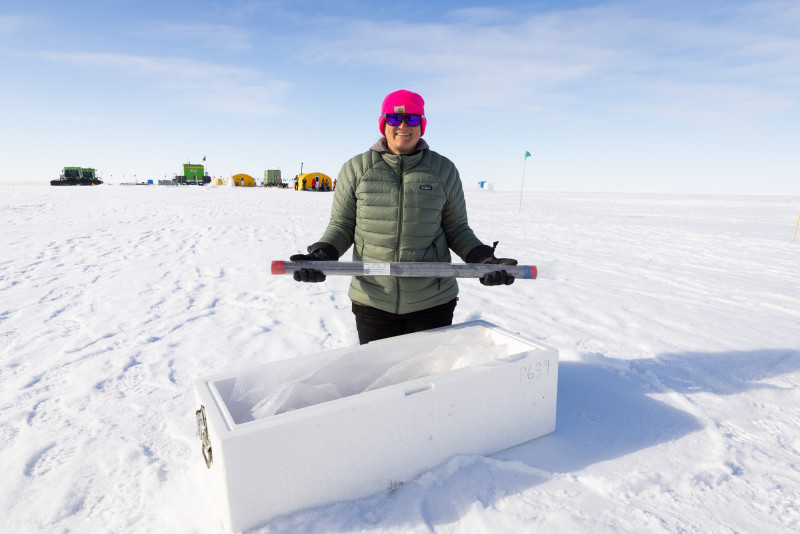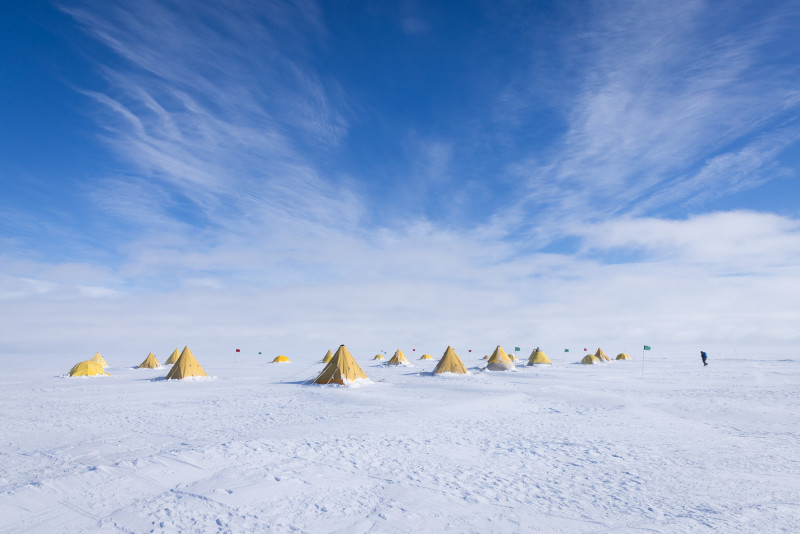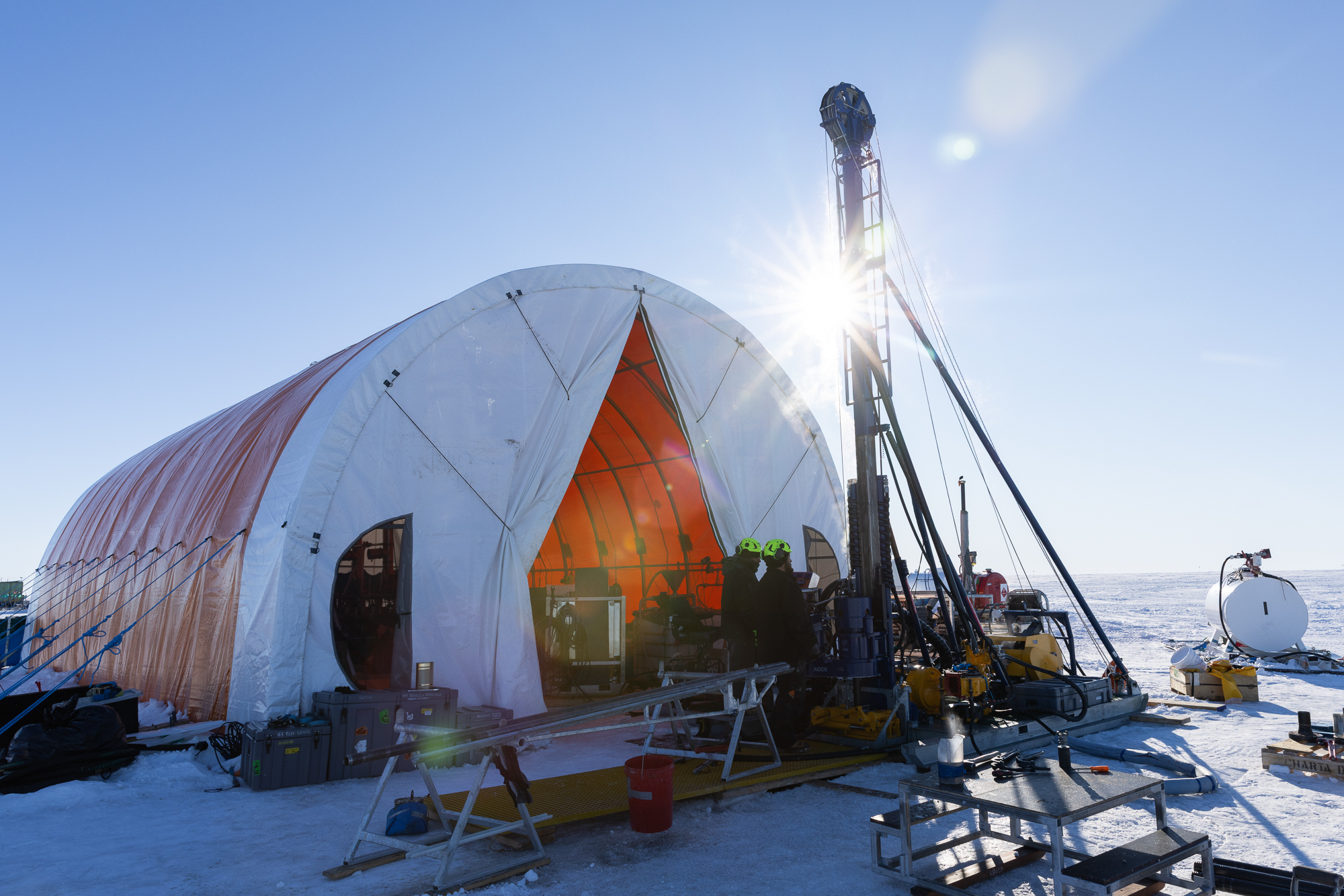
The 228 m of ancient mud and rock was drilled from under 523 m of ice. This game-changing scientific and technological achievement took place more than 700 km from the nearest Antarctic station (Scott Base), at a deep-field camp at Crary Ice Rise on the edge of the West Antarctic Ice Sheet. The sediment core holds an archive of past environmental conditions at the site from warmer periods in Earth’s history, vital information for climate scientists to determine how much and how fast the ice sheet will melt in the future under our warming climate.
The vast West Antarctic Ice Sheet holds enough ice to raise global sea level by 4-5 m if it melts completely. Satellite observations over recent decades show the ice sheet is losing mass at an accelerating rate, but there is uncertainty around the temperature increase that could trigger rapid loss of ice. Up until now, ice sheet modellers have relied on geological records from further afield.
The new sediment core, recovered by SWAIS2C (Sensitivity of the West Antarctic Ice Sheet to 2°C), a project with Earth Sciences New Zealand, Te Herenga Waka – Victoria University of Wellington, and Antarctica New Zealand at the helm, provides a direct and comprehensive record of how this margin of the ice sheet has behaved during past periods of warmth.
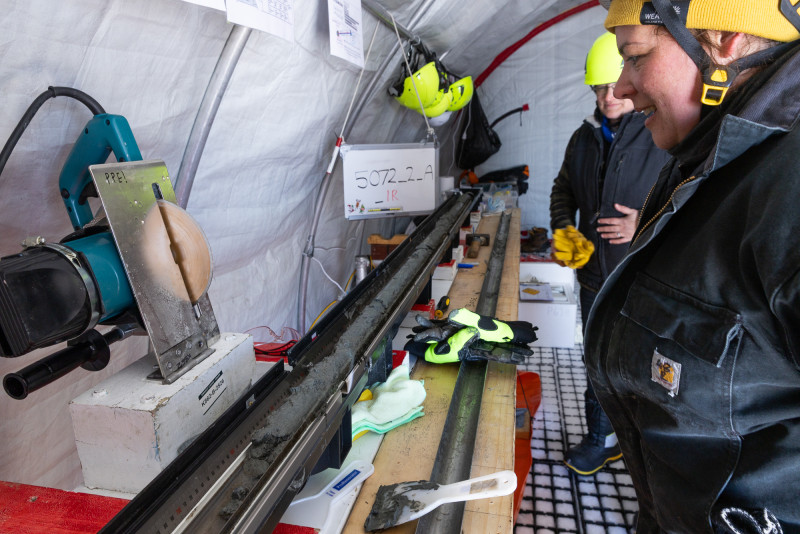
Dr Georgia Grant (Earth Sciences New Zealand) examines the first sediment core. Credit: Ana Tovey / SWAIS2C
“This record will give us critical insights about how the West Antarctic Ice Sheet and Ross Ice Shelf is likely to respond to temperatures above 2°C. Initial indications are that the layers of sediment in the core span the past 23 million years, including time periods when Earth’s global average temperatures were significantly higher than 2°C above pre-industrial,” says Co-Chief Scientist Dr Huw Horgan (Te Herenga Waka – Victoria University of Wellington, New Zealand, and ETH Zurich and WSL, Switzerland).
Preliminary dating of the sediment carried out in the field was based on identification of tiny fossils of marine organisms found in some of the layers. A wider team of scientists from the 10 countries collaborating in the SWAIS2C project will apply a range of techniques to refine and confirm the age of the records.